How to store, filter and use rainwater in your home - News24
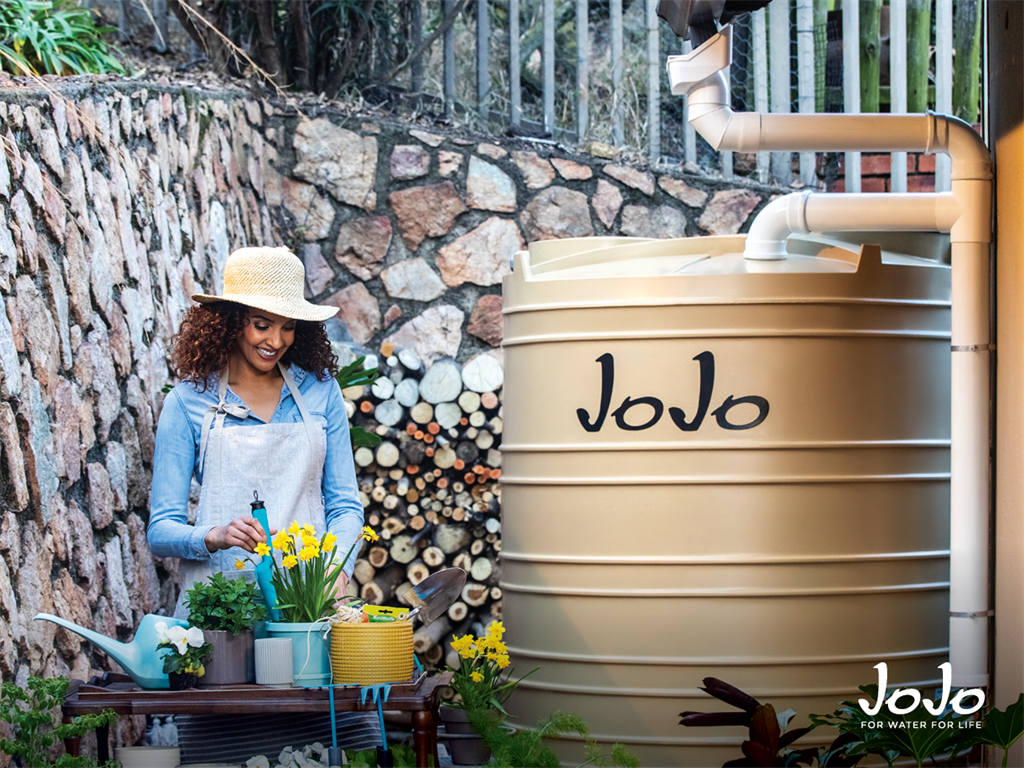
Rainwater harvesting and storage has never been more important. The double whammy of water scarcity as well as the rising cost of water has made us more aware than ever of the liquid value of a beautiful South African rainstorm. So, let's get you up and running ASAP.
What can you use stored rainwater for?
There are lots of low-grade uses: from gardening to flushing the toilet to washing the car. With the right filtration system, however, you can also convert your rainwater for a full domestic water supply, including consumption.
What do you need for the installation?
A water storage tank
Start by asking yourself how much water you need and what you want to use it for. The most common mistake in unsuccessful rainwater harvesting systems is a lack of storage capacity i.e. you need more storage than you think. A quick calculation to use: 1mm of rain on 1m² of roof surface = 1 litre of water. For example: a roof area of 100m² = 2,500 litres of water after 25mm of rain. Alternatively, calculate as follows: a 750-2,400l tank can cover a roof of 50-100m². Or, a 2,700-10,000l tank can cover a roof 100-300m². If this feels too complicated, simply call us and we can guide you over the phone or refer you to a preferred JoJo installer.
A proper foundation is key
It is very important to remember that tanks must be installed on a sound, level and smooth surface. Level paving will suffice, or a properly designed tank stand. Alternatively, a concrete slab needs to be built with a surface bed at least 85mm thick and at least 100mm wider than the base of the tank.
What else will you need?
Pipes, pre-filtration, a tank mozzie screen, a pressure pump, a pump cover and a pump-to-tank connector kit.
Pipes and elbows
Standard plumbing pipes and elbows in 110mm, 80mm or 75mm (this will vary depending on the installation and your preference). For a detailed overview of where these pipes will be required and what sizes we recommend for each of the installations, you can refer to our Water Storage Installation Guide.
Pressure pump
When choosing a pump, it is important to consider the water source, the application and the pressure required to ensure that the pump meets your requirements. We recommend using a pump cover to protect your pump from the elements and to prolong its lifespan.
Pump-to-tank connector kit
This all-inclusive kit permits seamless connection from your JoJo water tank to JoJo's 0.37kW or 0.75kW booster pumps.
Pre-filtration
This improves the quality of the harvested water and protects the pump. Keep in mind that the more pre-filtration options installed, the cleaner the water will be that enters into your tank. The options include a rainhead, which directs leaves and debris away from the flow of harvested rainwater, as well as a first-flush rainwater diverter, which flushes away the initial, most contaminated flow of rainwater and directs clean water to your tank. If you choose the DIY route, we advise cutting a hole through your tank lid and directing the water into the tank through your lid. However, if your installation is more complex and requires that holes be made in your tank, consider using a JoJo preferred installer in order to keep your warranty intact.
Mozzie screen
A mozzie screen should be fitted to the outside of your overflow, or the inside/outside of your tank inlet. This accessory allows water to pass through while blocking entry for mosquitoes and other insects (mozzies absolutely love rainwater, so this is a must).
Water filtration
Last but not least, if you want to use your rainwater for full domestic water supply including consumption, it needs to be filtered to potable drinking water standards. Ensure that you choose a filtration system that removes sediment, particulates and contaminants such as bacteria and other potentially harmful substances that could be present in the water. Our filtration range does all of the above and more. Shop the entire range here.


Comments
Post a Comment